
Macro Cycle

Japan’s Semi Renaissance: Joint 2nm R&D Progress Among 8 Major Giants
Japan’s semiconductor industry is experiencing a genuine renaissance. After decades in which the country’s role shifted from dominant memory and logic supplier to more specialized niches in equipment, materials, and certain devices, a new wave of coordinated effort is pushing Japan back toward the leading edge of process technology.
Interpreting the Sentiment Signal as Wafer Fab Utilization Breaches 85%
Wafer fab utilization is one of the semiconductor industry's most closely watched operational metrics. When utilization climbs above key thresholds, it has ripple effects across pricing, lead times, equipment demand, supplier margins, and market sentiment.
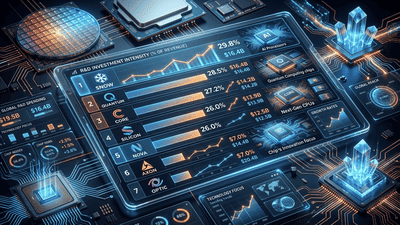
R&D Intensity Ranking in Semis: Who Keeps Doubling Down on the Future?
In semiconductors, research and development is not just a line item—it is the engine that determines who sets the pace of technology and who follows. R&D intensity, usually measured as R&D spending as a percentage of revenue, reveals how aggressively companies are investing in their future versus harvesting their present.
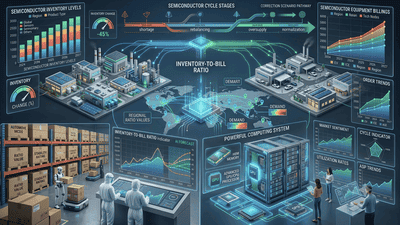
Practical Application of the Inventory-to-Bill Ratio in Semi Industry
Semiconductor executives and investors spend a lot of time staring at numbers, but not all metrics are equally useful for understanding where the cycle is heading. Among the more practical indicators is the inventory‑to‑bill ratio: a simple comparison of how much product is sitting in stock versus how much is actually being billed to customers over a given period.
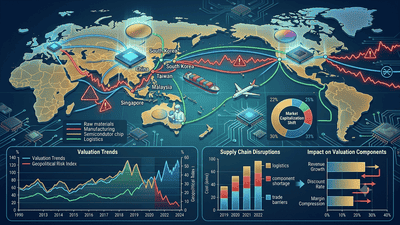
A Quantitative Model for Geopolitical Risk Premium in Semi Valuations
Geopolitics has moved from background noise to a central driver of semiconductor valuations. Export controls, regional subsidy races, onshoring mandates, and cross‑border M&A scrutiny all alter cash‑flow expectations and capital‑allocation decisions in ways traditional models often treat qualitatively, if at all.
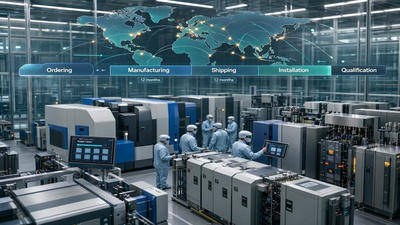
Semi Equipment Procurement Lead Times Extended to 12 Months
In semiconductor manufacturing, time is as critical a resource as capital. When lead times for key tools stretch from a few months to a full year, the ripple effects can reshape fab build schedules, technology roadmaps, and industry supply dynamics. The extension of equipment procurement lead times toward the 12‑month mark is more than an operational inconvenience;

Analyzing the Distortion Effect of Government Subsidies on Semi FCF
Government subsidies have become a central feature of the modern semiconductor landscape. From grants and tax credits to low‑cost loans and direct equity participation, public programs now influence where fabs are built, how capacity is expanded, and which companies lead in critical technologies. On the surface, these subsidies often look like free or cheap money that improves investment economics.

2026 Global Semi CapEx Map: The Divergence Between Advanced and Mature Nodes
The semiconductor industry entered 2026 with a clearer, more bifurcated capital expenditure landscape than at any point in the past decade. As hyperscalers and AI-driven computing demands continue to escalate, foundries and integrated device manufacturers (IDMs) prioritize advanced-node capacity (3 nm, 2 nm and next-generation gate-all-around architectures).
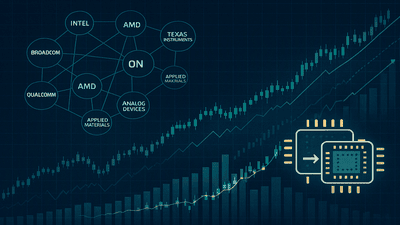
Global Semi M&A Value Hits 5-Year High, Consolidation Wave Accelerates
When global semiconductor M&A value hits a five‑year high, it is more than a headline about deal flow—it is a structural signal. Rising transaction values and a thick pipeline of strategic deals tell us that industry leaders believe scale, integration, and portfolio breadth are increasingly essential in a market shaped by AI, automotive electrification, industrial automation, and geopolitical tension. The current consolidation wave is not the first the sector has seen, but it is distinct in scope and motivation.
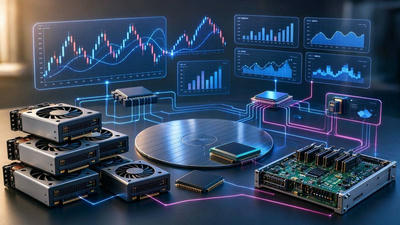
The Unexpected Correlation Between Semi Sentiment and Crypto Mining Demand
Semiconductors and cryptocurrencies might seem like inhabitants of different worlds: one, a physical industry of fabs, wafers, and equipment; the other, a digital realm of tokens, blockchains, and speculative cycles. Yet over the past decade, an unexpected correlation has emerged between sentiment in the semiconductor sector and demand from crypto mining. When miners are euphoric and building out capacity, semi sentiment often improves;